· Chris Landtiser · Practical Contexts · 6 min read
Building With Purpose - Inside Our India Hackathon With Microsoft
A look inside our India Hackathon with Microsoft, an event focused on proving that innovation isn't just theater, but about empowering global teams to build on their own terms.
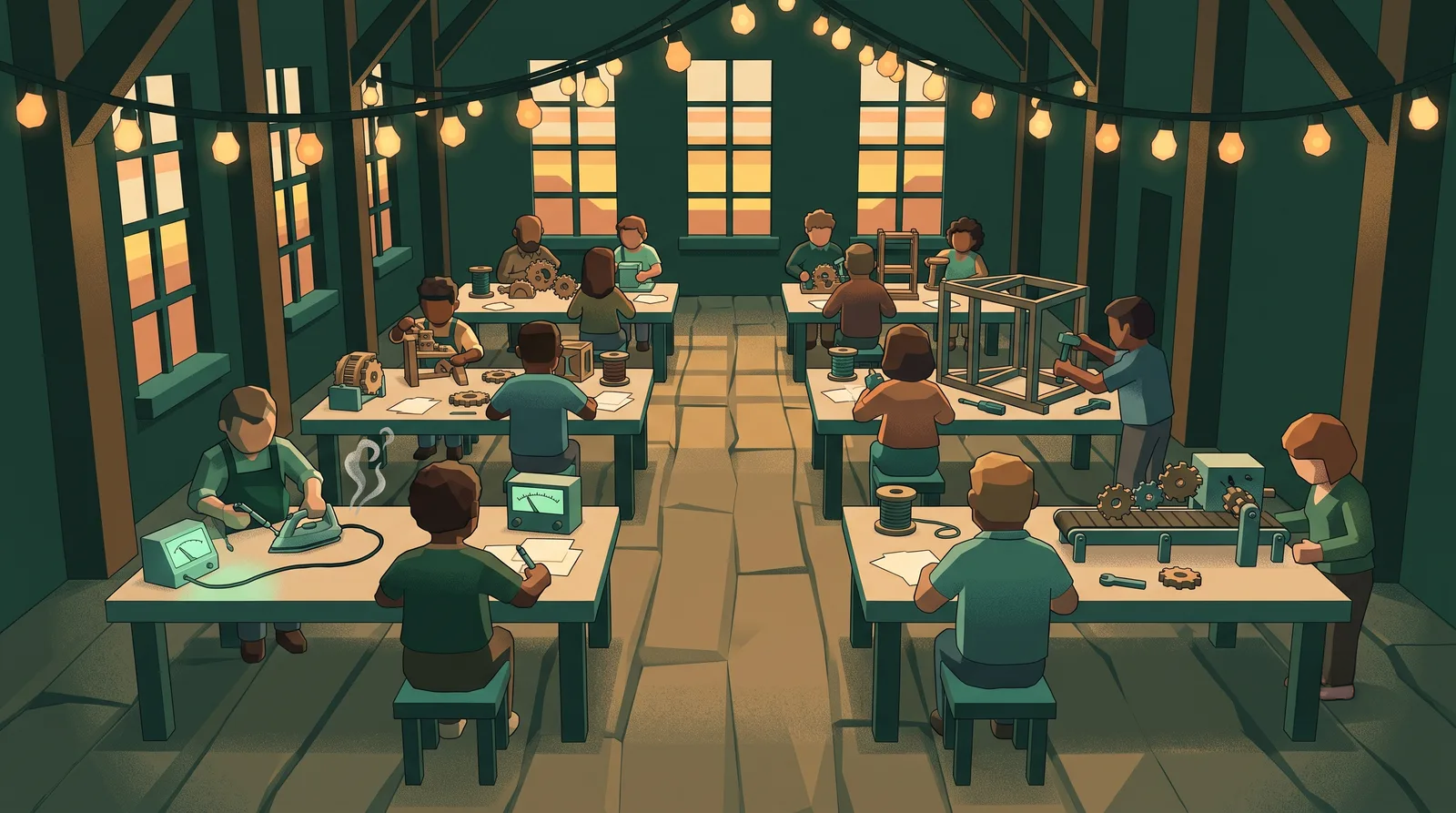
(See the winners and their work on LinkedIn!)
I have a theory about company hackathons: most of them are really just expensive theater. You fly people into a room, give them pizza and energy drinks, make them build something in 48 sleepless hours, and then… what? The projects die in a graveyard of “great ideas we never implemented,” and everyone goes back to their actual work.
Our India Hackathon needed to be different. Not just because we were partnering with Microsoft (though that certainly raised the stakes), but because this event was really about something bigger: proving that innovation doesn’t require a Silicon Valley zip code, and that every team - in every region, in every time zone - deserves the tools, training, and trust to build on their own terms.
The Setup: Why India, Why Now
At Huron, we’re genuinely global. Not in the “we have offices in multiple countries” sense that every company claims, but in the “we believe value gets created when people closest to the problems get to solve them” sense. That’s harder to pull off than it sounds.
When we started planning this hackathon, we could have done what most companies do: fly everyone to headquarters, run them through a standardized curriculum, send them home with a certificate. Instead, we asked a different question: What if we met people where they are, with the tools that make sense for their work?
That meant weeks of prep. Real prep, not just sending a calendar invite and hoping for the best. We ran AI foundations training so that anyone who wanted to participate - regardless of their starting point - had even footing. Because here’s what I’ve learned: innovation happens when you remove the barriers that make people feel like they don’t belong in the room. There are no dumb questions. Nothing too small, or big!
The Microsoft Partnership (Or: How to Actually Collaborate)
Working with Microsoft wasn’t just about access to their tools. It was about finding a partner who understood what we were trying to build - not a one-off event, but a repeatable framework for human-agent teams that could scale across our entire organization.
Microsoft showed up as a true partner from day one. Their support and engineering teams didn’t just parachute in with a PowerPoint deck (though I’m sure they had those ready, just in case). They helped us connect the threads from our previous hackathon events, reviewed our business cases with fresh eyes, and asked questions that made our plans better.
The leadership spine for the event was equally tight. Bobby Wilson, Sean Freeburger, and Ragini Sherry kept teams in motion toward their goals, balancing technical help with human excitement in equal measure.
How We Actually Chose Projects
Here’s where things got interesting (and where we could have easily screwed this up): We had to be selective. With space for 60 builders and ideas flowing in from across the company, we needed a process that felt transparent and fair.
We started by collecting business cases and asking a simple question: Which ideas do you want to build? Not which ones look good in a slide deck. Not which ones your VP thinks are strategic. Which problems are you personally excited to solve? We’ll be targeting focused events in 2026: specific platforms, topics, business units, etc. For this one? We just wanted attendees to stretch their creativity and feel empowered!
The leadership team did the first pass, prioritizing entries that had clear business support and realistic scope. Then we brought Microsoft into the review loop for a holistic sweep. That collaborative filtering gave everyone a shared lens before we ever sat down to build.
And you know what? The stuff people chose surprised me. Not every project was about saving millions of dollars or revolutionizing entire business units. Some teams just wanted to solve the annoying manual processes that ate three hours of their week. Those projects mattered just as much - maybe more - because they came from lived experience. I also did not expect a whole slew of collaborative Agents, each given a personality from the Guardians of the Galaxy!
What Success Actually Looked Like
We didn’t measure this week by slides or slogans. We looked at how many teams walked away confident in their new capabilities. How many ideas that would have gathered dust in someone’s notebook got turned into working prototypes. How many unexpected connections got made across business units and technical capabilities.
The answer? More than I expected, honestly.
One of my own team members, Anuj Pathak, crammed what was probably 90 days of training into barely 30 so he could represent SPARK AI India in person. Getting daily updates back here in the US from both Anuj and Bobby, hearing about the excitement and energy from both an implementer and a leader - that’s when it hit me that we’d done something right. This wasn’t just about AI. It was about creating space for people to surprise themselves with what they could build.
The Part That Keeps Me Up at Night (In a Good Way)
Here’s what I’m thinking about now: What comes next?
Hackathons are easy. (Okay, they’re not easy, but you know what I mean.) You create intensity, focus, and excitement for a week, and then everyone goes back to their regular jobs. The hard part is figuring out how to keep that momentum alive. How to take these projects from prototype to production. How to make sure the lessons learned don’t evaporate in the next quarterly planning cycle.
That’s the test of whether we actually built something sustainable, or just had a really good week. We’re dismantling the pieces of what worked and what didn’t and writing a whole new book on how to do this again, likely a few times, in 2026!
Thanks Where They’re Due
A huge thank you to the team leadership who didn’t just endorse this event but shaped it - in some cases traveling around the globe to make it happen. To Microsoft, for the collaboration, the time in the rooms, and the continued support as we keep pushing forward. And to every person who showed up, built something, broke something, fixed it, and learned in the process.
Innovation doesn’t happen in isolation. It happens when you give people the tools, the training, and the trust to build on their own terms.
Now we get to see what they do with it.
The Working Question
Everything I write, in one inbox — blog posts, LinkedIn newsletter editions, and first word on new workshops. One email a month.